Source technical yellow 3 trifluoromethylphenol for dyes agrochemicals
Find 30 listings for technical yellow 3 trifluoromethylphenol with varying CAS numbers and purity levels. Buyers can compare specifications like appearance, packing, and origin to select suitable synthesis material intermediates for industrial applications.
Key considerations
Products List




Comprehensive Sourcing Guide
Strategic Sourcing Guide for Technical Yellow 3 Trifluoromethylphenol
The procurement of technical yellow 3 trifluoromethylphenol requires a disciplined approach that balances chemical specificity with supply chain reliability. As a synthesis material intermediate, this compound serves as a critical building block in the pharmaceutical and agrochemical sectors. Buyers must navigate a market where product attributes vary significantly between batches and suppliers. The following guide outlines the essential parameters for sourcing this chemical, drawing upon observed market data and technical requirements to ensure a robust procurement strategy.
Technical Specifications and Physical Properties
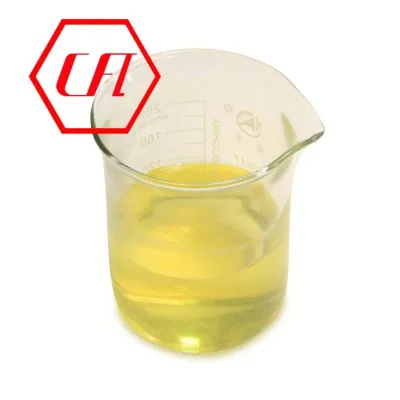
When evaluating potential sources for technical yellow 3 trifluoromethylphenol, the primary focus must be on the physical and chemical consistency of the material. Market observations indicate that this substance can appear as a powder or a liquid, with color profiles ranging from yellow to colorless or white depending on the specific grade and processing method. For instance, some listings describe the product as a yellow liquid, while others specify a white powder or a colorless liquid. This variance necessitates that buyers explicitly define their required physical state in the Request for Quotation (RFQ).
Density and thermal properties are critical for process integration. Observed data suggests a density estimate of approximately 1.3226 for specific liquid forms. Thermal stability is equally important; boiling points have been recorded around 71.5-72 °C under reduced pressure (8 Mmhg), while melting points for solid forms may range between 45-47℃. Storage conditions are strictly defined for certain grades, requiring temperatures at or below 20°C to maintain integrity. The molecular weight is a fixed attribute, observed at 188.13, which serves as a baseline for stoichiometric calculations in downstream synthesis.
Buyers should verify the CAS number, as the industry standard for this compound is 98-17-9. However, the market also lists various other CAS numbers such as 402-45-9, 178974-97-5, 769-39-1, 3467-85-4, 16582-93-7, and 90-72-2. These discrepancies often indicate different isomers, related intermediates, or cataloging errors. It is imperative to confirm that the specific CAS number matches the intended chemical structure for the application. Furthermore, the product type is generally categorized as a synthesis material intermediate, and the quality can range from industrial to refined or technical grades.
Compliance, Certification, and Regulatory Standards
Navigating the regulatory landscape for chemical intermediates requires rigorous verification of standards and certifications. The observed market data highlights a range of purity standards, with common specifications listed as 99%, 99.0% min, and 98%. These figures represent the minimum acceptable purity for specific batches, but they are not universal guarantees. A supplier claiming a 99% standard must provide batch-specific Certificates of Analysis (CoA) to validate this claim.
In terms of regulatory identifiers, the EINECS number 202-013-9 is a key reference point for European compliance. Additionally, specific product models and identifiers such as QMSC2500389, QMZCH250289, and QMCLJ25002 are used to track inventory and specifications. Buyers must ensure that the supplier can provide documentation linking the physical product to these specific model numbers. The presence of Brn (Beilstein Registry Number) 1911548 and Bnr 3092489 further aids in cross-referencing chemical databases for safety and regulatory compliance.
It is crucial to note that while some products are labeled with a "Brand Name" such as Chemfine, this does not imply a universal brand standard across the entire market. Buyers should not assume that a specific brand name guarantees a specific quality level without independent verification. The "Quality" attribute varies from "Industrial" to "Refined" to "Technical," and each classification carries different implications for impurity profiles and suitability for high-value applications. Procurement teams must request detailed impurity profiles to ensure the material meets the specific regulatory requirements of their target market, whether it be for pharmaceutical synthesis or industrial dye manufacturing.
Cost Drivers and Pricing Dynamics
The pricing structure for technical yellow 3 trifluoromethylphenol is influenced by several volatile factors, including raw material costs, energy prices, and logistics. The observed price range in the market is extensive, spanning from $0.8 to $2500 per unit. This wide disparity is not indicative of a single product but rather reflects differences in purity, packaging, quantity, and the specific grade of the chemical. A price at the lower end of this spectrum likely corresponds to industrial-grade material with lower purity or larger bulk packaging, while the higher end may reflect refined, high-purity grades with specialized handling requirements.
Minimum Order Quantity (MOQ) is a significant cost driver. The market shows an MOQ range from 1 to 2000 units. Smaller orders, often in the range of 1 to 10 units, typically carry a higher unit cost due to the fixed costs of handling and testing. Conversely, larger orders approaching the 2000-unit threshold may benefit from economies of scale but require significant capital outlay and storage capacity. Buyers must balance their inventory needs against cash flow constraints to optimize the total cost of ownership.
Packaging also plays a role in cost. Standard packaging options include 200kg drums, 25kg drums, and 190kg drums, with some suppliers offering "as required" or "as demanded" custom packaging. Custom packaging solutions often incur additional fees but can reduce waste and handling costs for the buyer. The origin of the product, primarily from regions like Jinan, Shandong, and Jiangsu, China, influences logistics costs. Buyers should factor in freight charges, customs duties, and insurance when calculating the landed cost, as these variables can significantly impact the final price compared to the base FOB price.
Typical Applications and Usage Scenarios
Technical yellow 3 trifluoromethylphenol is primarily utilized as a synthesis material intermediate in the production of complex organic compounds. Its chemical structure, characterized by the trifluoromethyl group, makes it particularly valuable in the synthesis of pharmaceuticals where metabolic stability and lipophilicity are desired. The compound's reactivity allows it to serve as a key precursor in the manufacturing of active pharmaceutical ingredients (APIs) and agrochemicals.
The specific application depends heavily on the purity and physical state of the material. For instance, the liquid form with a boiling point of 71.5-72 °C may be preferred for continuous flow chemistry processes, while the solid form with a melting point of 45-47℃ might be better suited for batch reactions requiring precise stoichiometric control. The "Technical" and "Industrial" grades are often used in large-scale industrial processes where minor impurities do not affect the final product's efficacy, whereas "Refined" grades are essential for pharmaceutical applications where regulatory limits on impurities are strict.
Buyers should also consider the storage requirements when planning applications. The recommendation to store the product at temperatures <= 20°C is critical for maintaining the stability of the compound during the synthesis process. Failure to adhere to these storage conditions can lead to degradation, affecting the yield and quality of the final product. Therefore, the procurement strategy must include an assessment of the buyer's storage infrastructure to ensure compatibility with the chemical's physical requirements.
Supplier Evaluation and Geographic Considerations
Evaluating suppliers for technical yellow 3 trifluoromethylphenol requires a multi-faceted approach that goes beyond price comparison. The geographic origin of the product is a significant factor, with the majority of observed listings originating from China, specifically regions like Jinan, Shandong, and Jiangsu. While these regions are known for their robust chemical manufacturing capabilities, buyers must verify the specific capabilities of the supplier within these locations.
Supplier evaluation should include a review of their customization capabilities. The market data confirms that customization is available, allowing suppliers to tailor packaging, purity levels, and labeling to meet specific buyer needs. This flexibility is a strong indicator of a supplier's ability to adapt to changing market demands. However, buyers must also assess the supplier's track record for consistency. The variation in product models and standards suggests that different suppliers may have different internal quality control processes.
When selecting a supplier, buyers should prioritize those who can provide transparent documentation regarding their production processes and quality control measures. The presence of specific product models and identifiers in the supplier's catalog is a positive sign, but it must be backed by verifiable test results. Buyers should also consider the supplier's capacity to handle the required MOQs and their ability to scale production if demand increases. Geographic proximity to the buyer's facility can also influence lead times and logistics costs, making local or regional suppliers potentially more attractive despite potentially higher base prices.
Quality Control and Long-Term Procurement Strategy
Implementing a robust quality control (QC) protocol is essential for mitigating risks associated with sourcing technical yellow 3 trifluoromethylphenol. Given the observed variations in appearance, color, and purity, buyers must establish clear acceptance criteria before placing orders. This includes specifying the required CAS number, purity percentage, and physical state in the purchase order. Regular third-party testing should be conducted on incoming shipments to verify that the product matches the provided specifications.
Long-term procurement considerations involve building a resilient supply chain that can withstand market fluctuations. Diversifying the supplier base is a prudent strategy to avoid dependency on a single source. Buyers should aim to establish relationships with multiple suppliers who can provide the same chemical under different specifications, ensuring continuity of supply in case of disruptions. Additionally, maintaining a buffer stock of critical raw materials can help mitigate the impact of lead time variations, which can range significantly depending on the supplier and order size.
The evolution of regulatory standards and environmental regulations also necessitates a proactive approach to procurement. Buyers should stay informed about changes in chemical regulations that may affect the availability or usage of technical yellow 3 trifluoromethylphenol. Engaging with suppliers who demonstrate a commitment to sustainability and compliance can provide a competitive advantage and reduce the risk of regulatory non-compliance. By integrating these quality control measures and strategic planning elements, buyers can ensure a stable and efficient supply of this critical chemical intermediate.
FAQs
What is the CAS number for technical yellow 3 trifluoromethylphenol?
The primary CAS number is 98-17-9, though other identifiers like 402-45-9 appear in listings. Buyers must verify the specific CAS matches their intended chemical structure before ordering to avoid isomer confusion.
Can I request custom packaging for this synthesis material intermediate?
Yes, customization is available for packaging requirements such as 200kg drums or 25kg drums. Suppliers also offer as requested options, allowing buyers to tailor packaging to their specific logistical and storage needs.
Which purity standards are commonly observed for this chemical?
Common purity standards include 99%, 99.0% min, and 98%. These figures represent minimum acceptable levels for specific batches, and buyers should request batch-specific Certificates of Analysis to validate the actual purity.
How should I store technical yellow 3 trifluoromethylphenol to maintain stability?
Storage conditions require temperatures at or below 20°C to maintain integrity. Adhering to these limits prevents degradation, which is critical for ensuring consistent yield and quality in downstream synthesis applications.
What is the typical price range for this intermediate?
The observed price range spans from 0.8 to 2500 USD per unit. This wide disparity reflects differences in purity grades, packaging sizes, and order quantities rather than a single fixed market price.
Which physical states does this compound appear in?
The product appears as a powder, liquid, or yellow liquid depending on the grade. Specific attributes include a melting point of 45-47°C for solids and a boiling point of 71.5-72°C for liquids.